



Rmanj Monastery

Description
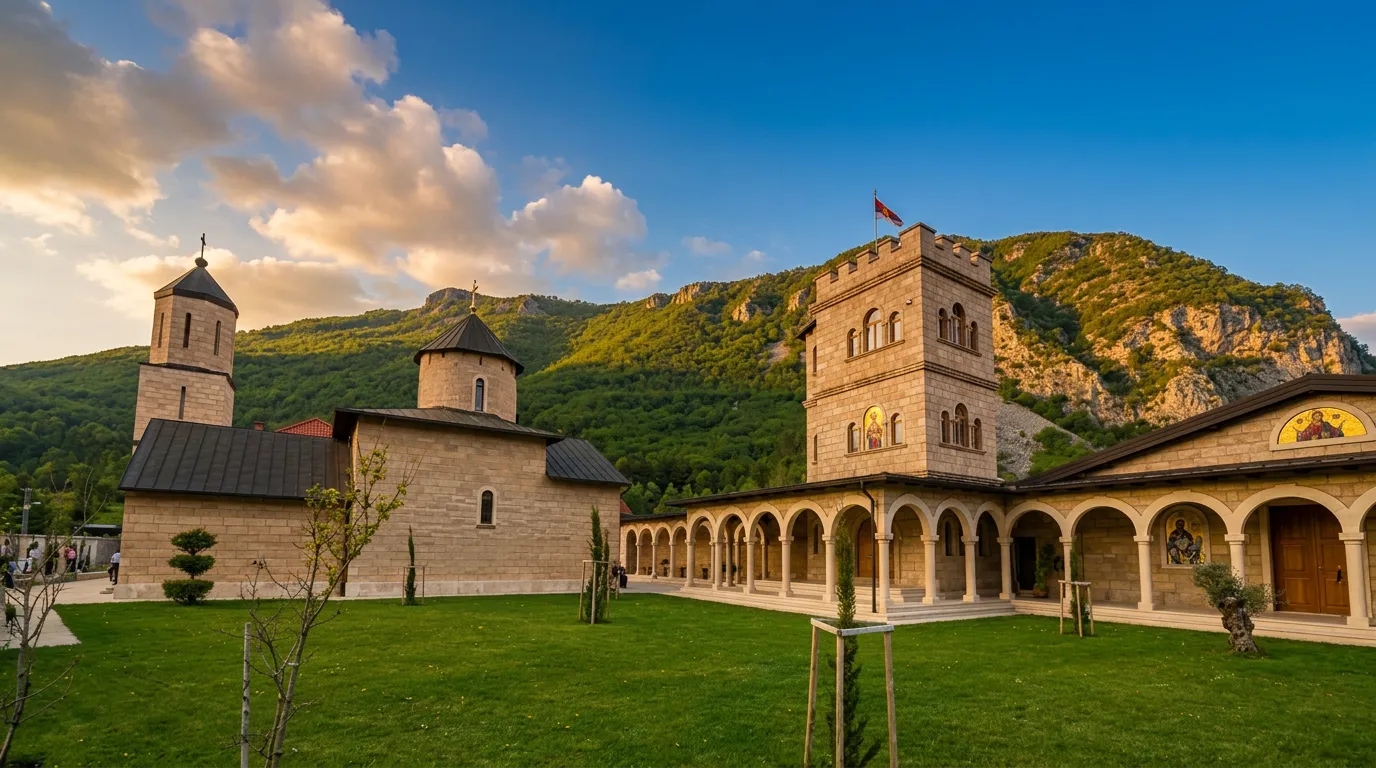
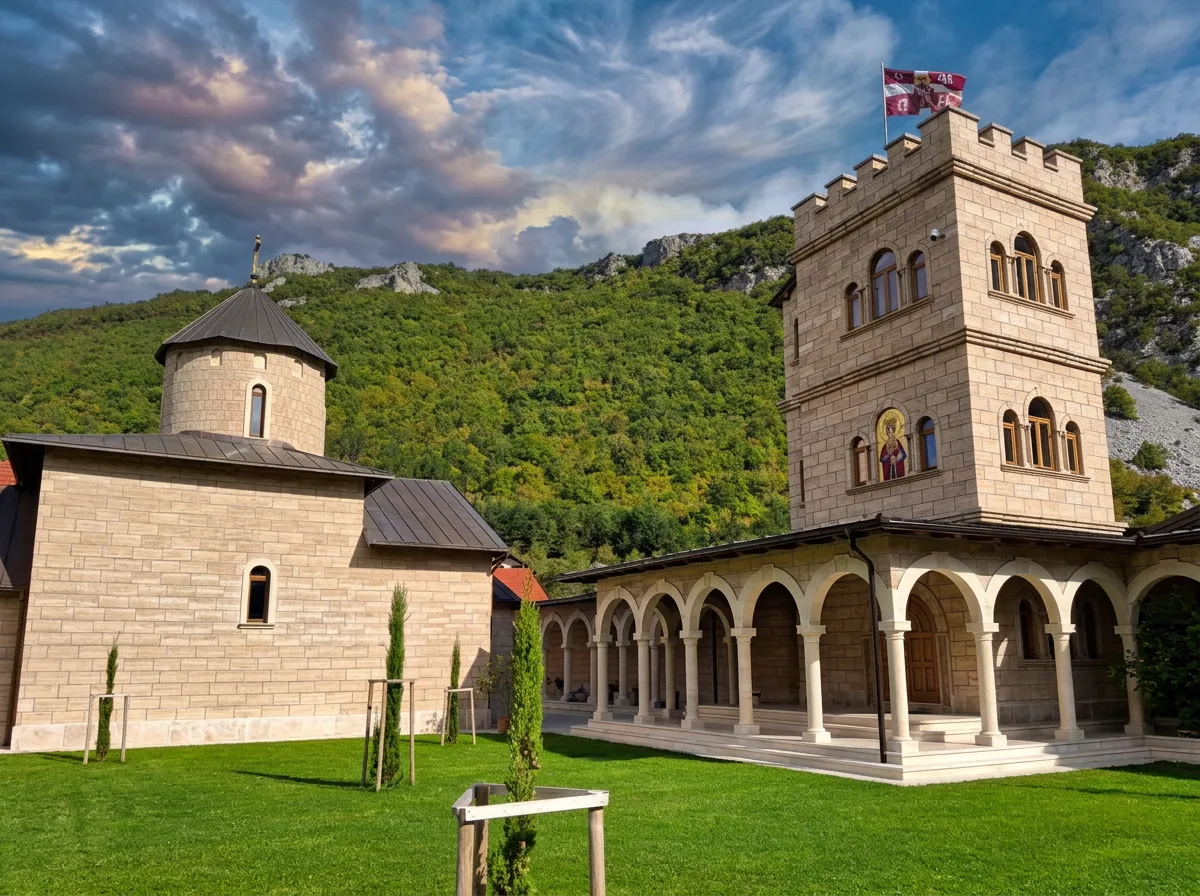
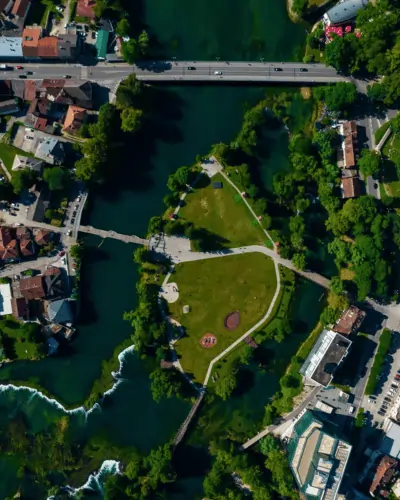
Rmanj Monastery is a Serbian Orthodox monastery in Martin Brod, in the picturesque area where the Unac flows into the Una, within Una National Park. It is an important spiritual center of the northern tri-border area of Bosnia, Lika, and Dalmatia. Local tradition attributes its construction to Catherine Branković, daughter of the Serbian despot Đurađ Branković. According to the name of her son Herman, who died young of illness, the name arose — from Herman to Rmanj.
The first reliable written mention dates from 1498. In the 16th and 17th centuries it was the seat of the Metropolitanate of Dabar-Bosnia and a cradle of the spiritual elite; at the turn of the century it housed up to one hundred monks. Repeatedly destroyed and restored, it was bombed by the Luftwaffe in 1944 because a partisan hospital was located there. The church was built of the characteristic Una tufa, and its frescoes were restored. It was declared a national monument of BiH.
BO capsules:
The monastery and the rivers
It is hard to imagine a more beautifully situated monastery in Bosnia and Herzegovina than Rmanj. It stands right at the meeting point of two crystal-clear rivers — the Unac, which flows into the Una — surrounded by the wooded slopes of Una National Park.
The church was built of Una tufa, a sandstone-like deposit characteristic of this area, as if it had grown out of the river itself. This blend of river, stone, and forest makes Rmanj a place that attracts visitors even beyond pilgrimage motives.
History of survival
Rmanj is a monastery that has survived almost everything: Turkish attacks in 1638 and 1661, demolition in 1785, devastation in 1875, bombing in 1944, and mining in 1995. Each time it either fell into ruin or was destroyed, and each time someone returned and started again.
The best illustration of that perseverance is 1944: the Luftwaffe demolished the monastery to the ground because it housed a partisan hospital, and the long-unstudied frescoes disappeared forever. Only in 1974 did the first restoration begin, and the brotherhood finally re-established monastic life in 1998 — three decades and three wars later.