




Tito's Cave

Description
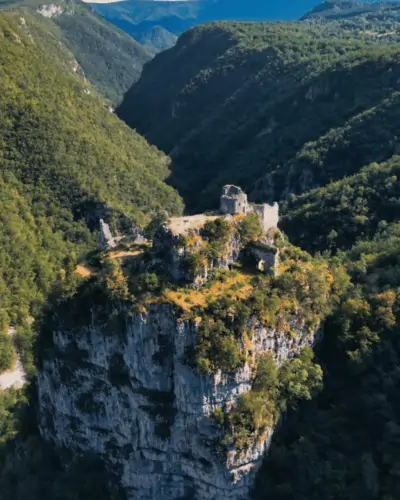
Titova pećina in Drvar is one of the best-known historical sites from World War II in Bosnia and Herzegovina. It is located on the slope of Gradina hill, about 23 meters above the bed of the Unac River, just one kilometer from the center of Drvar. The cave is 85 meters long in total, and two barracks were built in its entrance area, serving from January 1944 as the headquarters of the Supreme Command of the NOV and POJ and as a meeting place with Allied military missions.
On the dramatic 25 May 1944, the famous Desant na Drvar began here, when German paratrooper units attempted to capture Marshal Tito. The cave is part of the memorial complex Muzej 25. maj, which was declared a national monument of Bosnia and Herzegovina in 2011. In socialist Yugoslavia, it was visited by up to 200,000 visitors annually. After wartime devastation, it was restored in 2006 with support from USAID and reopened to visitors.
The cave and the Desant na Drvar
Since January 1944, Drvar had been the center of the liberated territory of Yugoslavia, and in the cave above Unac, Marshal Tito and the Supreme Headquarters received representatives of Allied military missions and planned operations. On the evening before 25 May - the day of Tito's birthday celebration - Tito spent the night in Drvar, which the Germans had anticipated.
At dawn, bombs from five enemy squadrons began falling over the town, followed by waves of paratroopers and glider troops - 730 elite soldiers in total. While fighting was taking place right in front of the cave entrance, Tito and members of the Headquarters managed around noon to break through toward Ataševci, from where they were flown to Bari on a Soviet aircraft.
The cave today
Titova pećina has been arranged as part of the military museum and is the only one of the several caves Tito used as a wartime hideout to receive this treatment - precisely because of the dramatic nature of the Desant na Drvar. Visitors can today see the entrance area with restored barracks and the corridor with wooden planks leading to the iron doors installed back in 1938.
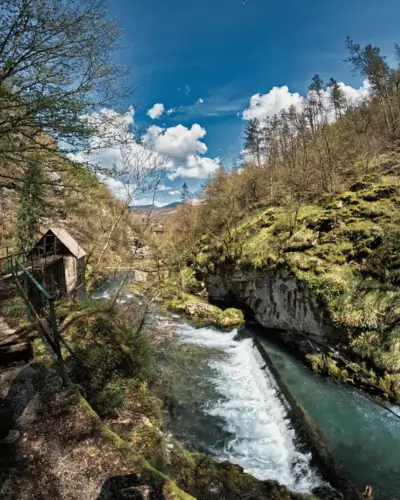
Deep inside the cave there is a channel that cascades down to a siphon lake, and during rainy periods the water can rise all the way to the entrance and spill over into a 12-meter-high waterfall. The Muzej 25. maj, Titova vila and the OZNA building complete the memorial complex, which welcomes up to 10,000 visitors a year.