




Old Town of Blagaj




Description
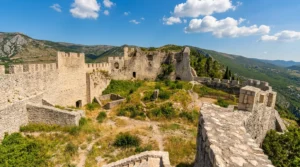
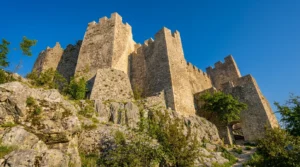
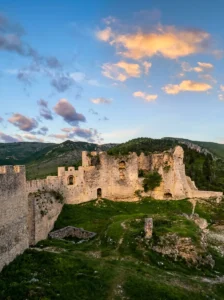
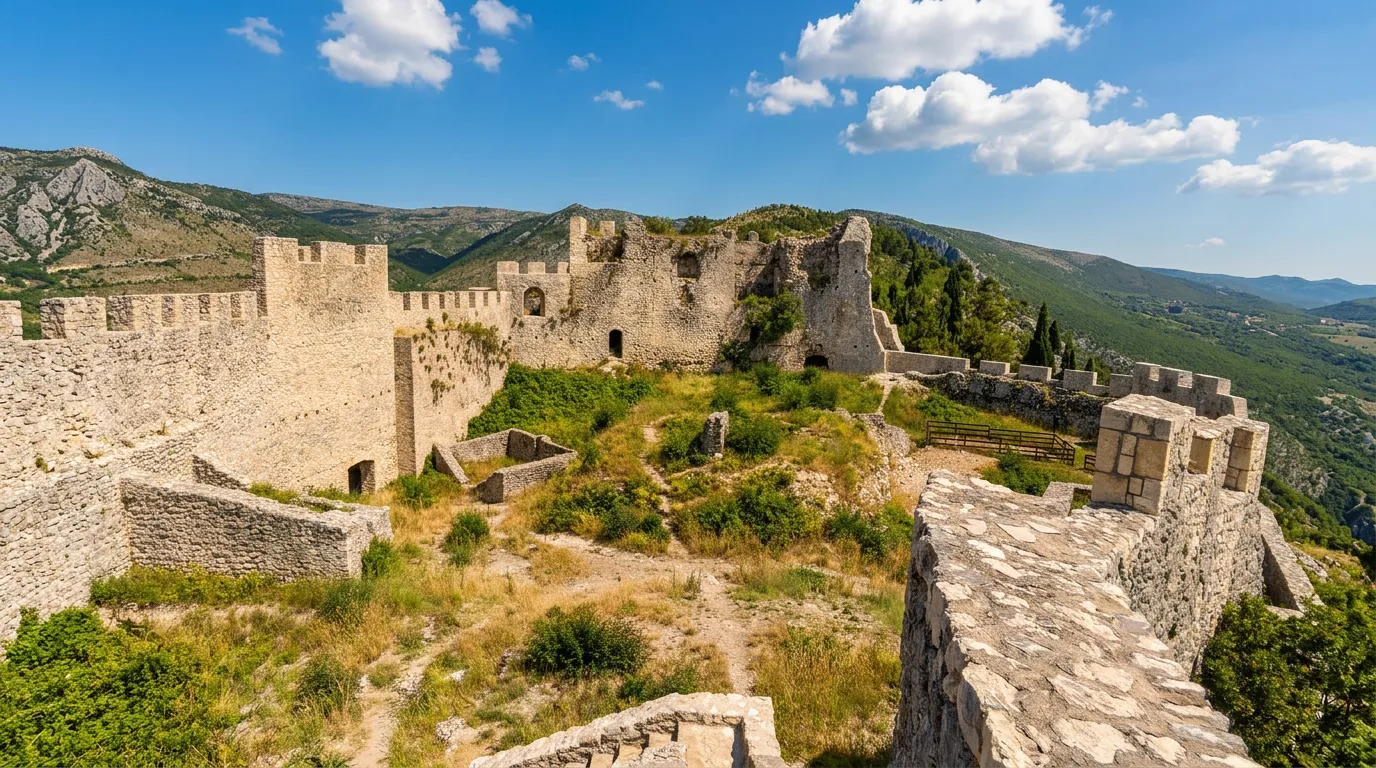
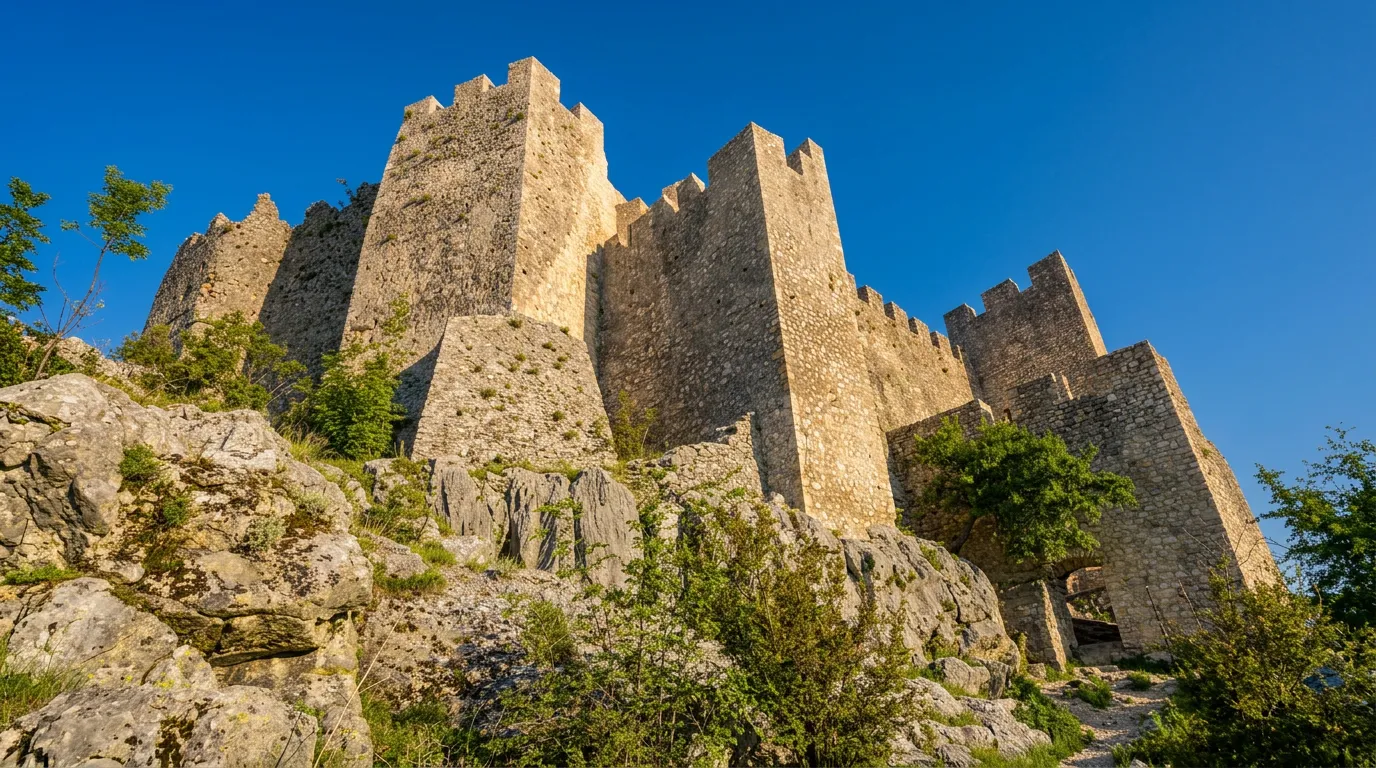
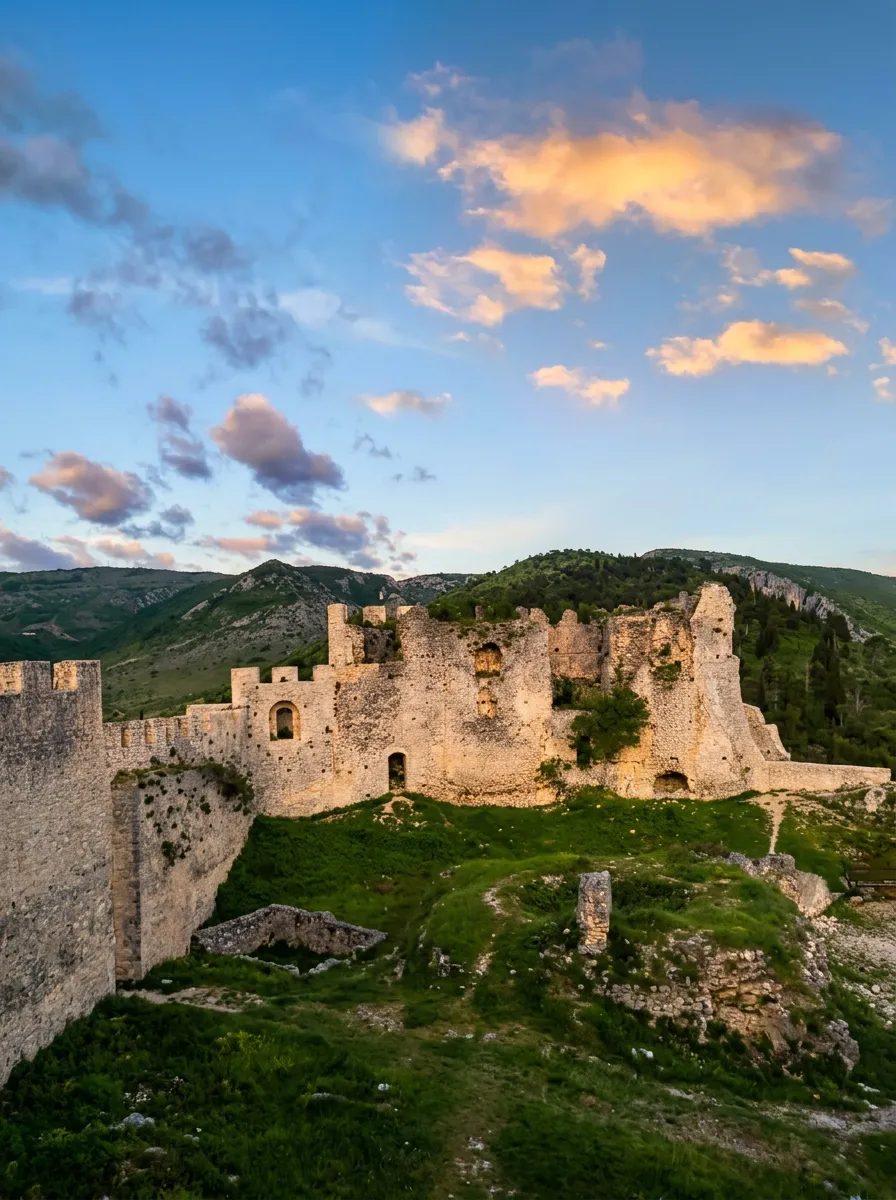
Old Town Blagaj, also known as Stjepan-grad or Bona, is one of the oldest continuously inhabited fortress sites in Bosnia and Herzegovina, located on top of a karst hill above the source of the Buna River, near Mostar. Research has shown that the area was continuously inhabited from the Iron Age to 1835 – from an Illyrian hillfort, a Roman castrum, and a Byzantine extension, all the way to a medieval palace and an Ottoman mosque.
The fortified complex covers an area of about two hectares, and the walls are in places preserved up to 12 metres high. In May 1404, the town became the seat of Duke Sandalj Hranić, and later of Duke Stjepan Vukčić Kosača, after whom it became popularly known as Stjepan-grad. The Ottomans captured it in 1465 and restored it in 1699 and 1827. A 900-metre-long horse path, only 2 metres wide, leads to the entrance in a serpentine climb. It has been declared a national monument of Bosnia and Herzegovina.
Layers of History
Few fortresses in Bosnia and Herzegovina carry so many historical layers in such a small area as the Old Town of Blagaj. On the triangular flattened hill are, at three different points, the remains of an Illyrian hillfort, a Roman castrum, and a medieval fortress with Ottoman additions. The Romans, unusually for their practice, built here away from roads – the hill was simply too strategic to be bypassed. When the Ottomans took the town in 1465, they found walls still standing and enriched the site with a mosque and a cistern, but the garrison preferred to stay in the town below. In 1664, Evliya Çelebi wrote that the town "looks as if it has just come out of the hands of a master builder" – praise that speaks more clearly than any analysis about its condition at the time.
Architecture and Finds