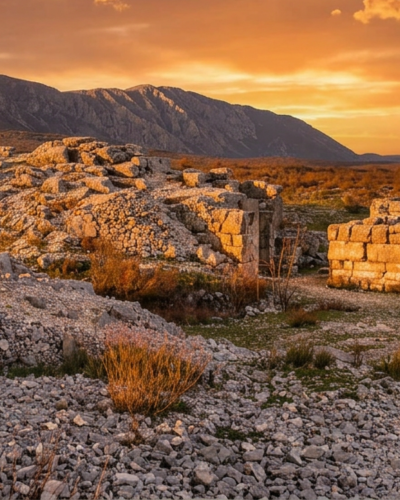





Badanj Paleolithic Cave
Description
Badanj Cave, located in the canyon of the Bregava River near the village of Borojevići, is one of the most important Paleolithic sites on the eastern Adriatic coast. This rock shelter, rising 45 meters above the riverbed, was home to human communities between 13,000 and 12,000 BC. Its most significant treasure is an engraved drawing in the rock — the oldest monument of art in Bosnia and Herzegovina. The engraving depicts a horse attacked by arrows, a typical motif of Mediterranean art from that period. Carved into a large, polished block of stone, this drawing has survived millennia, bearing witness to the spiritual world and hunting traditions of our distant ancestors, although today it is unfortunately exposed to damage from the elements.
The engraving and its significance
The engraving in Badanj is not just old — it is the only one of its kind on the entire eastern coast of the Adriatic Sea and as such belongs to the rare circle of Paleolithic art sites that change the geographical picture of prehistoric art. The horse surrounded by arrows is a typical motif of the Mediterranean Paleolithic মানুষ, known from sites in France and Spain, but previously unseen in this part of the continent.
It is carved into a slanted polished stone block that broke off from the cave massif, and research damaged only its smaller part, which was probably destroyed back in the Paleolithic era. The engraving still stands in the cave — in situ, in its original place where it has been for 13,000 years.
Daily life in the rock shelter
Research by Đuro Basler also provided a rarely detailed insight into the daily life of prehistoric communities that stayed in Badanj. The layout of the finds shows that around the central hearth at the bottom of the rock shelter, the inhabitants prepared food, made tools from flint and bone, and created jewelry — beads from deer teeth.
The bones of the animals found, especially deer, show that the community stayed there seasonally, mainly from March to May. It was not a permanent settlement — it was a temporary camp station on the seasonal migratory routes of hunters who followed the herds and occasionally left their mark in the rock.
Damage to the engraving weather damage and human neglect — a warning to visitors not to touch it.