


Kujundžiluk Old Bazaar



Description
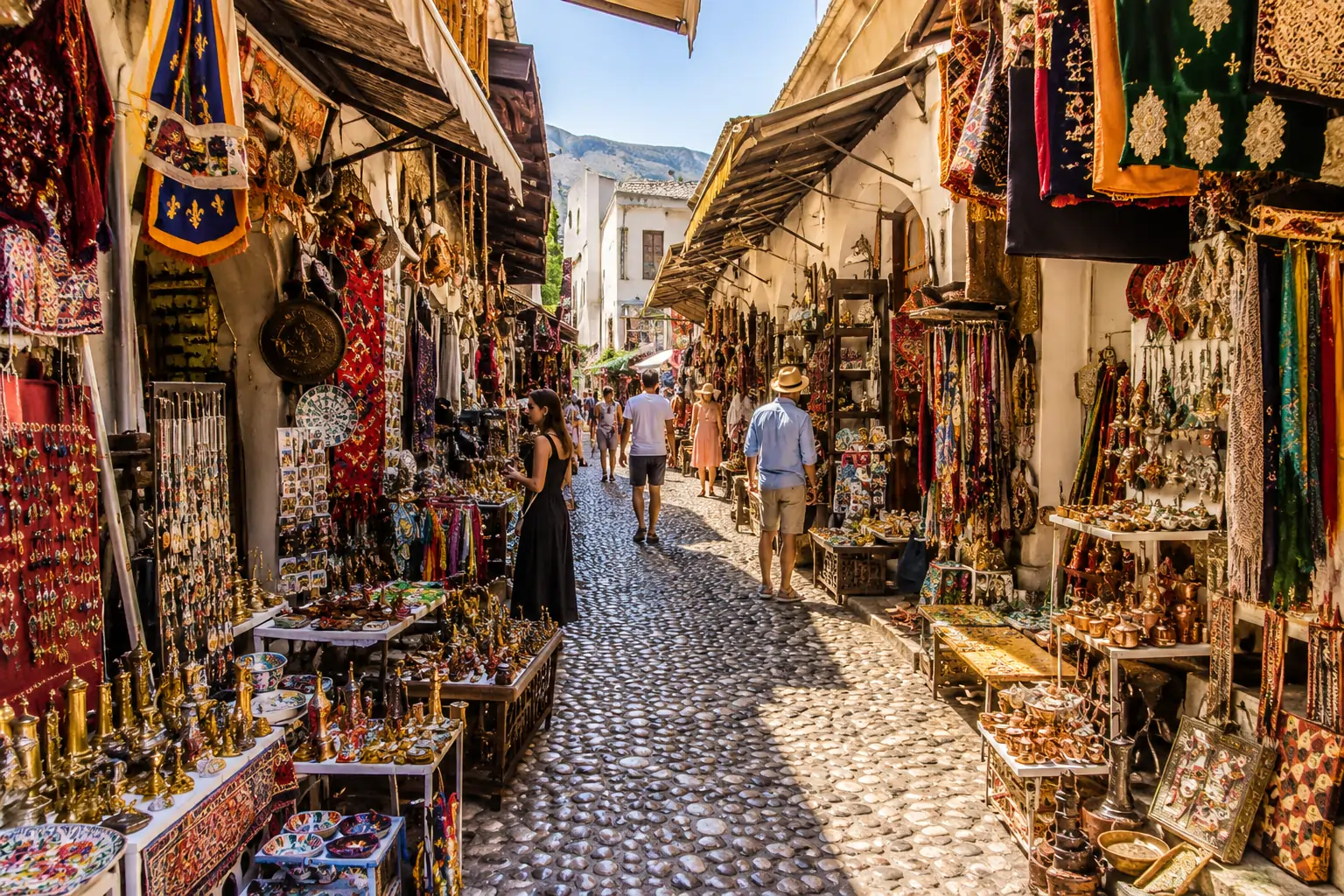
Kujundžiluk is the oldest and most picturesque part of Mostar – a cobbled bazaar from the mid-16th century that runs from the Old Bridge to Mala Tepa, along the left bank of the Neretva. It takes its name from the kujundžije (goldsmiths) who had their workshops here; the first, Hadži Osman, is recorded as early as 1631. In the Ottoman era the street was the trading heart of the whole region and counted more than 500 shops. To this day it has kept its authentic look and several traditional crafts, such as hand-worked copper and carpet weaving.
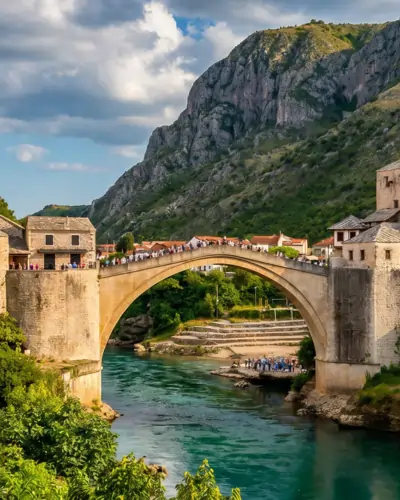
Together with the Old Bridge, the bazaar offers an evocative cross-section of Ottoman architecture and everyday Mostar life – the bustle of craft shops, the aromas of traditional cuisine and the buzz of its cafés. It also offers the city's finest souvenirs, an essential stop on any visit to Mostar.
Kujundžiluk – Mostar's Old Bazaar
Kujundžiluk is the oldest urban zone of Mostar, dating back to the 16th century, and one of the best-preserved examples of an Ottoman bazaar on the Balkans. Cobblestone streets, stone facades and the scent of tradition lead you step by step towards the Old Bridge, while goldsmiths, coppersmiths and carpet weavers call out from every side — craftsmen passing their trades from generation to generation.
History of Kujundžiluk
Kujundžiluk takes its name from the kujundžije — goldsmiths who worked for centuries on the left bank of the Neretva. The first goldsmith, Hadži Osman, was recorded in written sources as early as 1631, and during the Ottoman Empire the bazaar counted more than 500 shops, making it one of the largest trading centres in the region. The great fire of 1861 consumed almost the entire bazaar, but Kujundžiluk rose from the ashes once again — and to this day preserves the spirit and appearance that made it famous throughout the world.