




Kušlat




Description
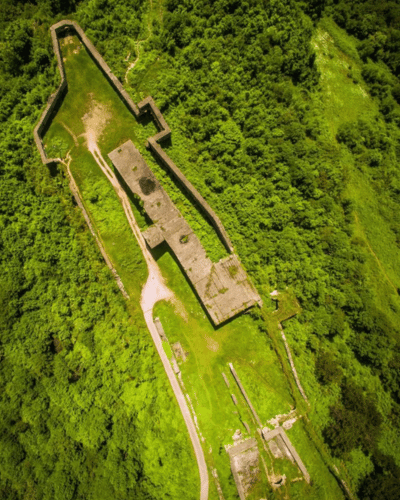
Kušlat is a medieval town and fortress that originated in the 13th century, located on a vertical rock above the confluence of the Jadar River and the Drinjača, 15 kilometers south of Zvornik. The fortress belonged to the royal domain in the Trebotić parish and is first mentioned in 1346. From 1404 it was in the hands of Hrvoje Vukčić Hrvatinić, from 1411 in the possession of the Serbian despot Stefan Lazarević, and it came under Ottoman rule in 1459.
In the Ottoman period, Kušlat was a military stronghold with garrisons and a granary, and inside the old walls the Kušlat Mosque was built — considered the oldest military mosque in Bosnia and Herzegovina, built during the reign of Sultan Mehmed II al-Fatih in the 15th century. Evliya Çelebi described the path to the fortress as 500 stone steps carved into the cliff and a town of 120 houses with gardens. The fortress was abandoned shortly before 1833.
The fortress in the sky
Evliya Çelebi was not prone to exaggeration, but about Kušlat he wrote that "the cliff rises to the sky" and that "a person does not dare to look down where the river roars like thunder." The description was not figurative: the fortress was built on a pointed, sloping, egg-shaped rock, and the only access was via 500 stone steps carved into the cliff itself, only two paces wide, with a stone railing on both sides.
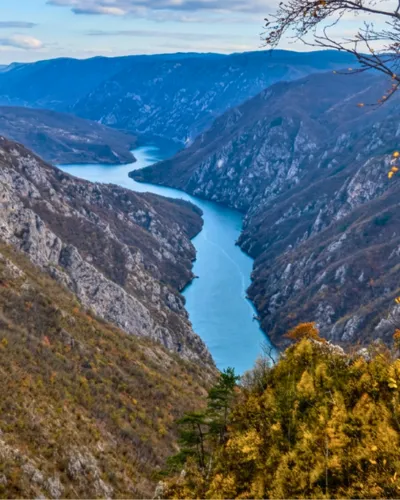
Below, the Jadar River flows into the Drinjača, roaring through the gorge. Ivo Andrić said of Kušlat: "What kind of Bosnian are you if you don't know Kušlat" — and it is hard to imagine a better description of how forgotten this place is.
Kušlat Mosque and its significance
Inside the fortress walls of Kušlat, the Ottoman garrison built a mosque in the 15th century for the needs of its barracks — and this modest building holds the title of the oldest military mosque in Bosnia and Herzegovina. It was built during the reign of Sultan Mehmed II al-Fatih, the conqueror of Bosnia, which means it was created immediately after the Ottoman expansion and the fall of the Bosnian kingdom in 1463. The mosque has been restored and is once again in use today, preserving a continuity that has lasted for more than five centuries — from a military garrison to a place of prayer at the foot of the abandoned fortress.