


Mogorjelo




Description
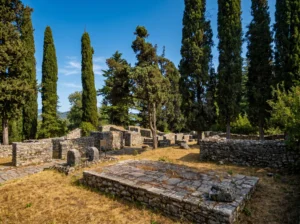
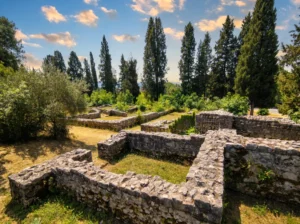
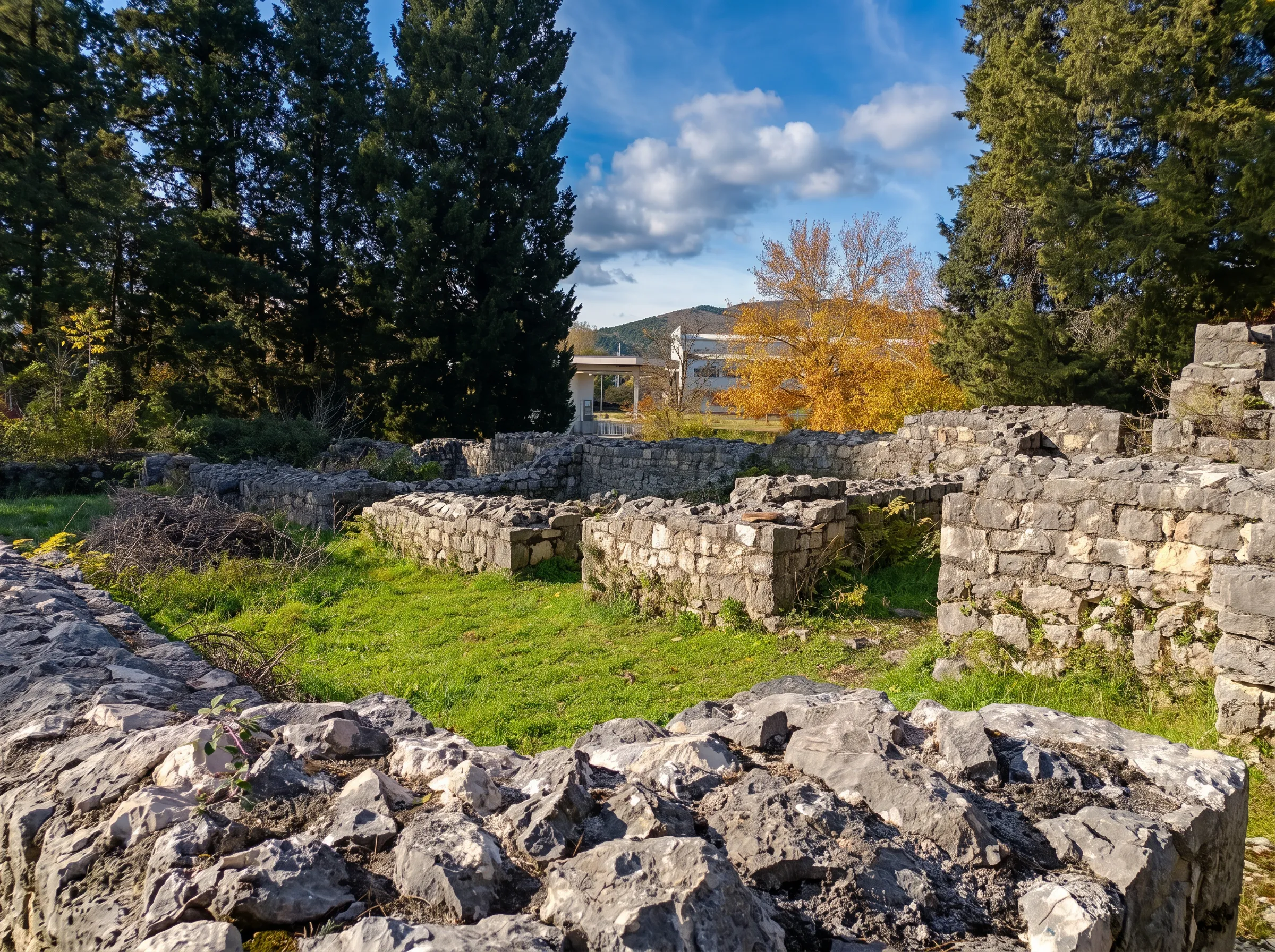
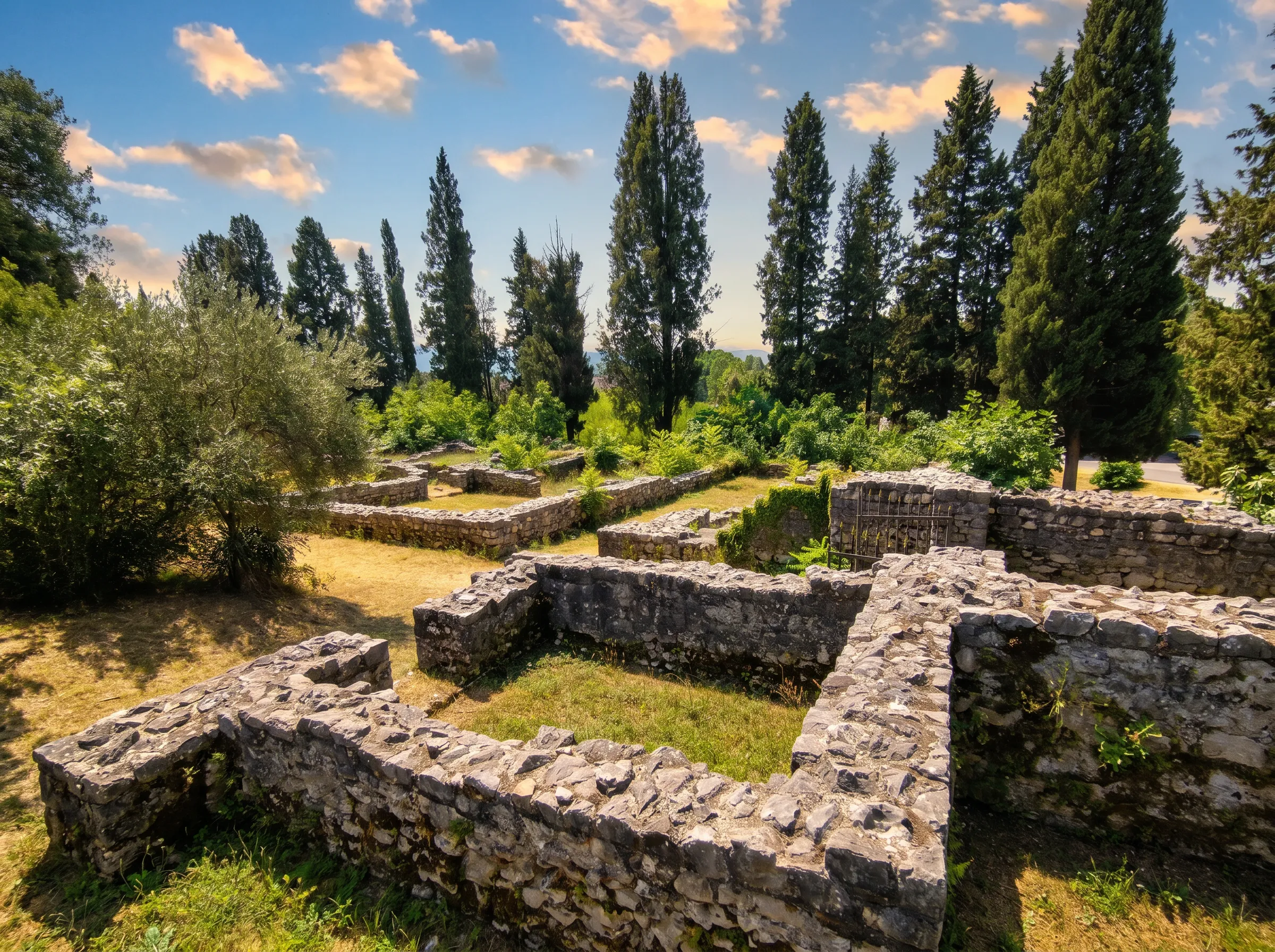
Mogorjelo is one of the most important Roman sites in Bosnia and Herzegovina, located on a hill by a branch of the Neretva, five kilometers south of Čapljina. It originated in the mid-1st century as a private agricultural estate (villa rustica) of a Roman veteran who received the property as a reward for fighting in Dacia.
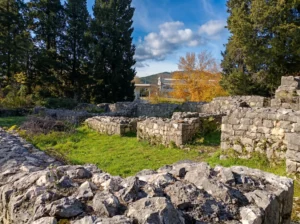
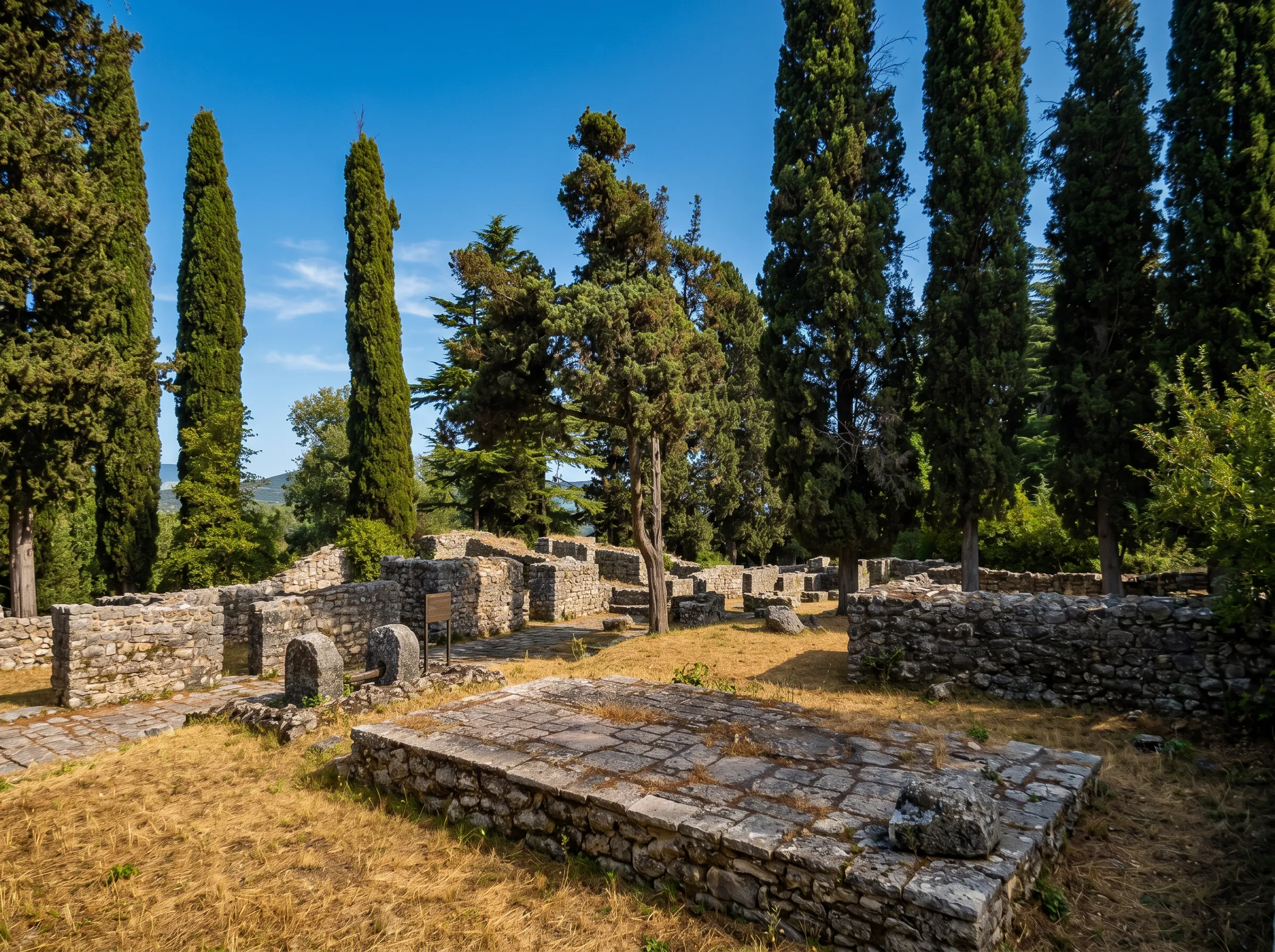
The estate processed olive oil, wine, and grain. By the end of the 3rd century it became state property, and at the beginning of the 4th century a fortress (castrum) measuring 102 × 86 meters was built, with eleven defensive towers and three entrances, to protect supplies for the Roman city of Narona. The Visigoths destroyed it in 401–403, and in the 5th century a basilica was built on the ruins. It was discovered in 1885 during the construction of the Sarajevo–Metković railway and researched from 1899 to 1903 under the supervision of the Austrian archaeologist Karl Patsch. It was declared a national monument of Bosnia and Herzegovina.
Architecture of the villa and castrum
What makes Mogorjelo exceptional is not only its age, but also the complexity of its spatial organization. The large palace in the southern part of the complex was built during the reign of Emperor Diocletian: the upstairs rooms had mosaic floors, walls decorated with faux marble, and the upper-floor portico was supported by Corinthian columns made of Korčula stone.
The northern gate of the castrum (Porta decumana) was decorated with orthostats depicting acanthus and grapevine, forming a ceremonial colonnade. Along the perimeter walls were spacious rooms for housing workers and storing tools, while four channels drained rainwater — one toward the Neretva, three toward the surrounding fields.
Archaeological finds and layers of time
Mogorjelo is not just one historical era — it is a stratigraphy of centuries. From the 1st century, remains of the villa with facilities for processing oil and wine, a mill, and a bakery have been preserved. From the 4th and 5th centuries come an ancient sarcophagus with acroteria measuring 2.23 × 6.99 × 1.11 meters, funerary stelae, and parts of architectural sculpture.
Of particular interest is the discovery of a Carolingian sword and a gilded belt set from the 9th century — proof that the site was inhabited long after the fall of Rome. The pottery found spans the period from the 1st to the 10th century, and there are also three stećci from the late medieval period, making Mogorjelo one of the rare places where Roman and Bosnian heritage meet physically.