



Ruler's Court in Kraljeva Sutjeska



Description
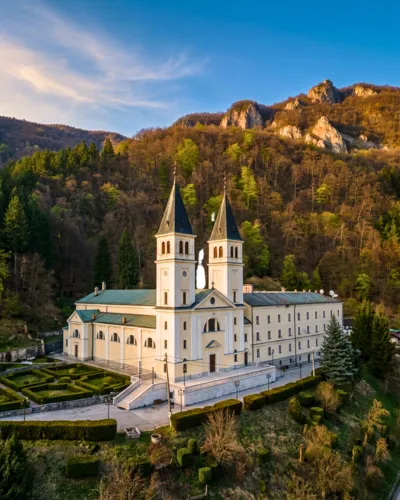
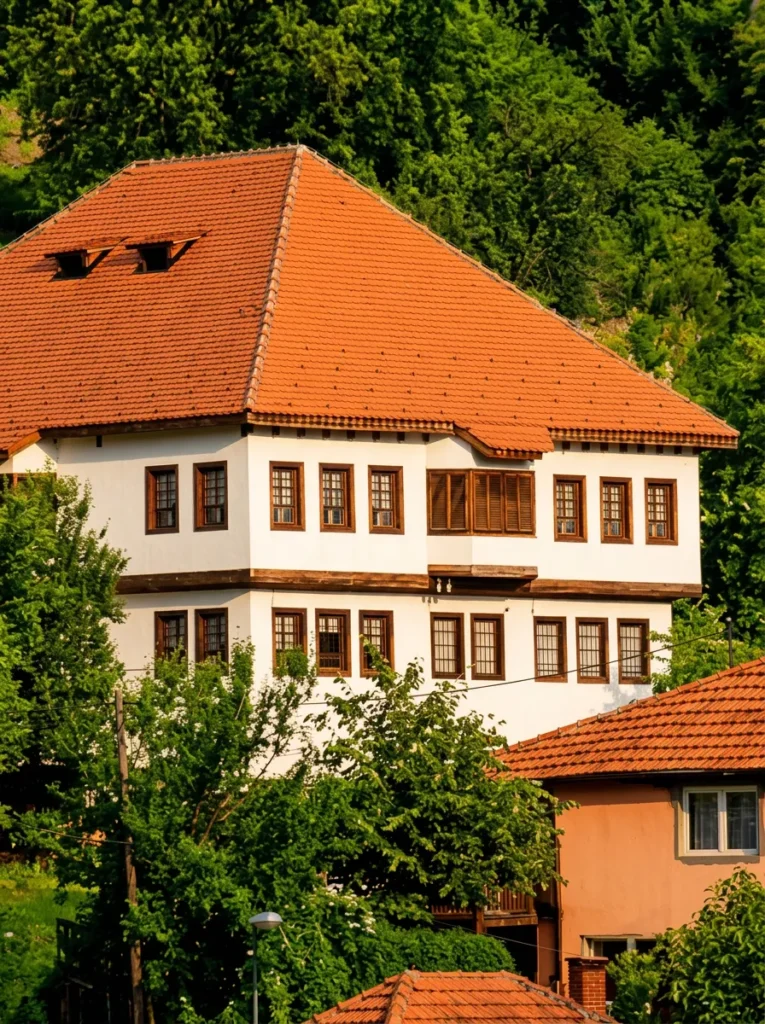
The ruler's court in Kraljeva Sutjeska is the remains of the Bosnian royal court from the 14th and 15th centuries, located on the banks of the Urva stream in Kraljeva Sutjeska, 12 km from Kakanj. It was built during the rule of Ban Stjepan II Kotromanić, and the first written mention dates from December 28, 1341. A market settlement developed around the court, and nearby is the Franciscan Monastery with the Church of St. John.
Since the time of King Tvrtko I, it was the most important royal seat of the Bosnian rulers and the center of the royal chancery. The palace complex consists of two parts: on the eastern bank, the Grgurevo site with the Eastern Palace and the court chapel of St. Gregory, and on the western bank, the Dvori site with the Lower Palace, Upper Palace, and utility buildings. The total area of the palace complex is about 1,490 m². The walls were conserved in 1977, and the Grgurevo site is now arranged as an archaeological park. The Royal Court has been declared a national monument of Bosnia and Herzegovina.
Court without walls
The royal court in Kraljeva Sutjeska is unusual for one thing that immediately sets it apart from all fortified residences of that era: it was built without fortifications. There are no ramparts, no towers — only palaces, a chapel and utility buildings arranged on both sides of the Urva stream.
That open architecture speaks of the security and stability the Kotromanić dynasty felt in this part of Upper Bosnia, as well as of a specific understanding of the representation of power that did not need to be threatening. Sutjeska was not a fortress but the centre of court and cultural life — a place where rulers received envoys, signed charters and lived.
Fifty or so documents, one place
Around fifty written sources confirm that the Bosnian rulers regarded Kraljeva Sutjeska as their true "stono misto" — literally the seat, the capital. From Tvrtko I to Stjepan Tomaš, for almost an entire century, this was the office of the Bosnian kingdom.
The Venetian carver Nikola, who in 1341 committed by contract to work at the court of Ban Stjepan, is one of the first witnesses to that vitality. The last document dated from Sutjeska is from 1480. With the arrival of the Ottomans, the town slowly disappeared, and over five centuries the Urva stream carried away most of the ruins — but what remains is enough to tell the story.