
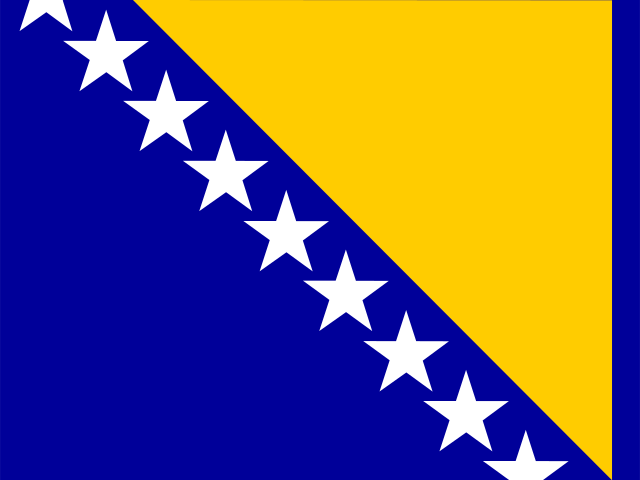

Some places catch you off guard. They surprise you without warning, right at the moment you thought you'd seen enough of the world. Bosnia and Herzegovina is one of those places.
While the rest of Europe counts tourists by the square meter — while you're waiting in line for a selfie at the Eiffel Tower or squeezing through Dubrovnik in July — here you can still stand in the middle of an ancient bridge and have it almost to yourself. You can still sit in a café in Sarajevo nd spend an hour talking with a waiter you've never met.
You can still wander into a village in Herzegovina and somehow find yourself at a table with a local host who insists you try everything they've cooked — and who will genuinely be offended if you say no.
That's Bosnia. It's hard to explain to someone who hasn't been. But we'll try.
Nature That Leaves You Speechless
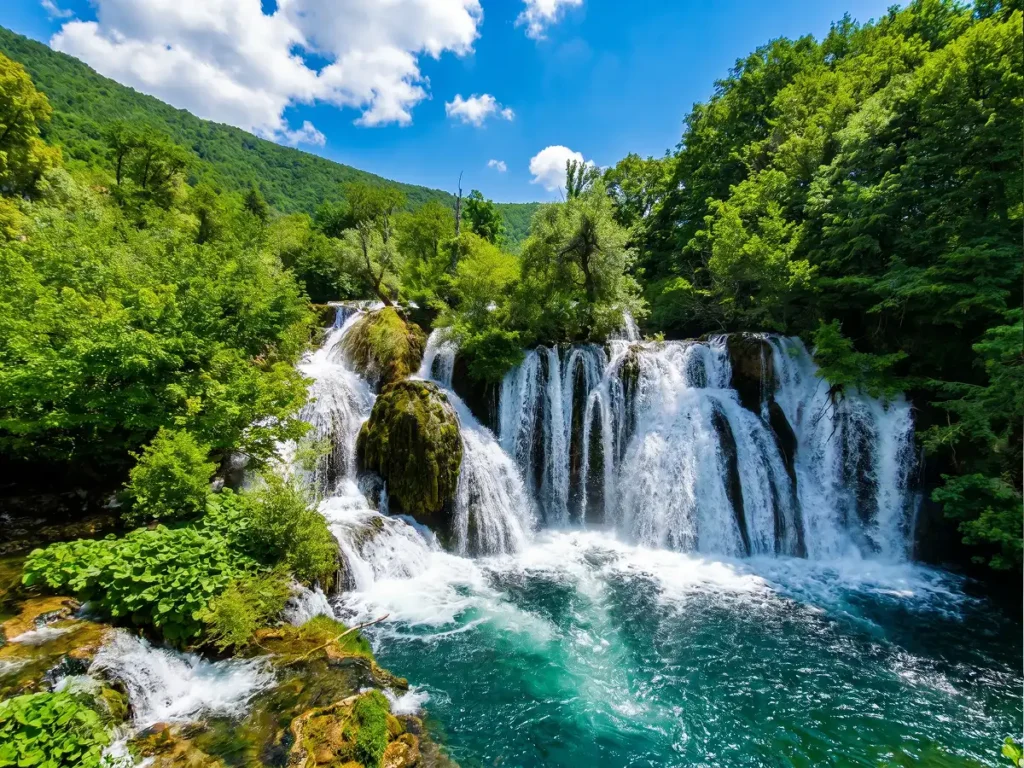
Canyons that would be national parks anywhere else in the world are just — a road here. Rivers the color of turquoise that look digitally edited, but aren't. Mountains where you can find snow even in August. Lakes like Prokoško lake ili Blidinja koja izgledaju kao da su pala s neke islandske razglednice.
Una, Neretva, Tara, Sutjeska — every river has its own personality, its own color, its own rhythm. White-water rafting on the Una or Neretva isn't just an adventure — it's an hour spent in nature that looks as though no human hand has ever touched it.
And all of it within a relatively small area. In a single day, you can start on a mountain, end up near the sea Neum), and stop through a city that remembers the Ottoman Empire along the way. Few countries in Europe can offer this kind of variety within so few kilometers.
Cities With Soul
Sarajevo
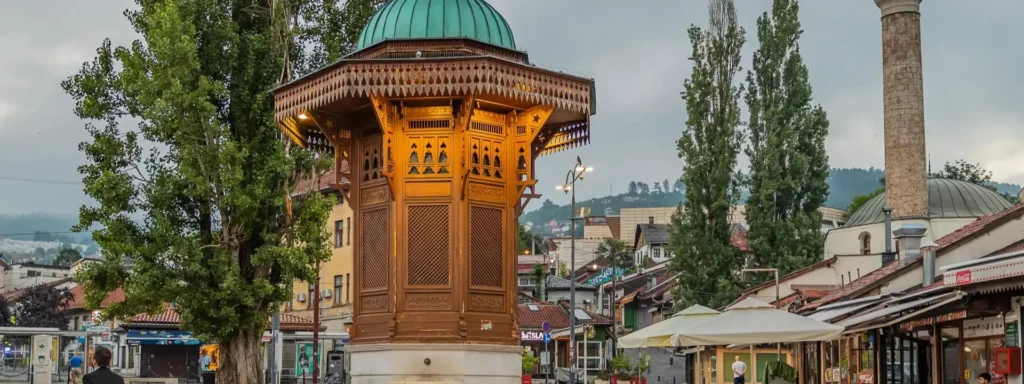
Sarajevo doesn't look like anything else. A mosque, a church, a synagogue, and a cathedral — all within a few minutes' walk of each other. The old bazaar, Baščaršija, has smelled of grilled meat and coffee since the 15th century. A tram rattles through the city center as if it hasn't heard of Uber. And while the city carries all of that history, culture, and weight — it survived, and somehow remains loud, alive, and unexpectedly joyful.
Mostar
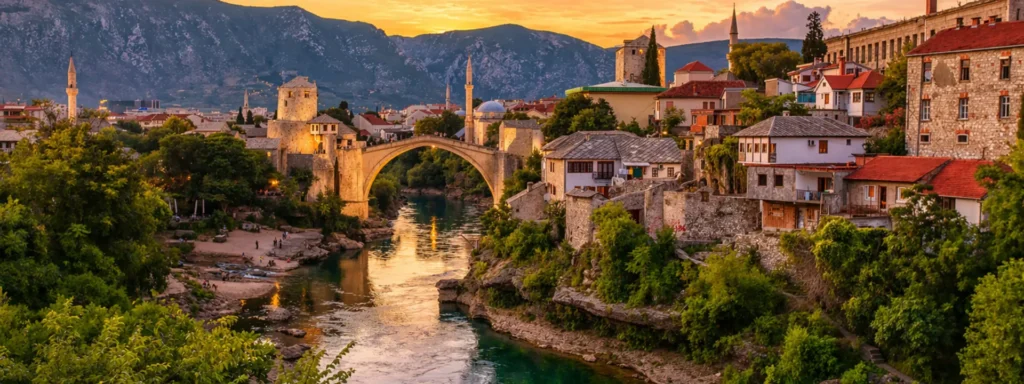
Mostar is, yes, touristy. But step off the main street and you'll find quiet neighborhoods, menus without English translations, and a view of the Neretva river that no Google image can quite capture. The Old Bridge, built in 1566, isn't just a tourist attraction — it's a symbol of something that's difficult to name in a single word.
Banja Luka, Trebinje i Jajce
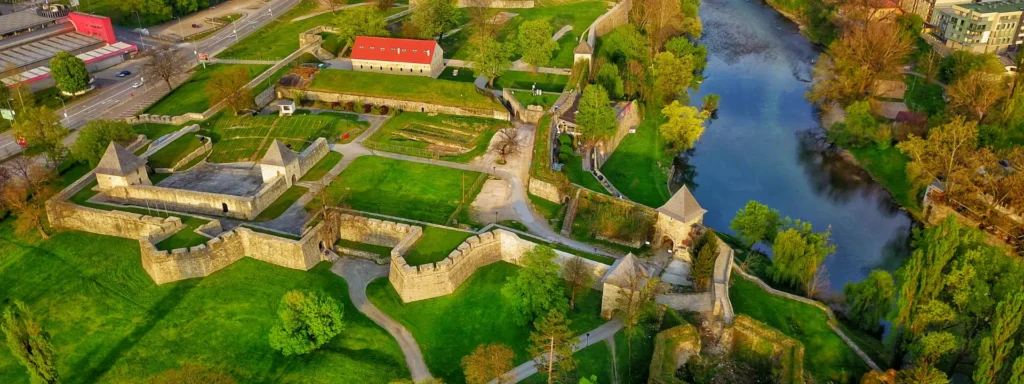
Trebinje might be the most beautiful small town on the Balkans — and almost nobody outside the region knows about it. Banja Luka has a medieval fortress and a river winding through its very heart. Jajce has a waterfall in the middle of the city center. Tuzla has a saltwater lake on its town square.
Every city here has its own quirk, its own story — and none of them try too hard to impress you, which is probably exactly why they all do.
Food and Coffee as a Cultural Ritual
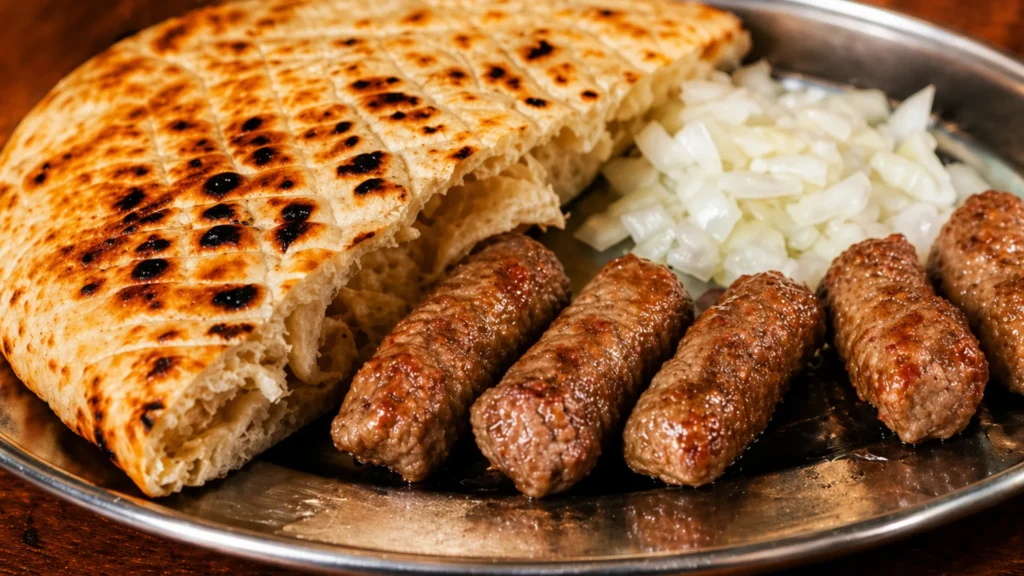
Bosnian cuisine isn't fusion. It isn't trendy. It isn't Instagram-ready at first glance. But grilled meat with fresh cream cheese and raw onion, burek eaten standing outside a bakery, slow-roasted lamb that's been cooking for hours, a walnut-stuffed apple dessert to finish — this is food that knows where it comes from and has nothing to prove to anyone.
And the coffee. Bosnian coffee isn't just coffee in the European sense. It isn't something you drink in a hurry, order to go, or consume in front of a laptop at a coworking space. You sit with it. You talk. You go quiet. A single small pot can last longer than any important meeting you had last week — and that's okay. Actually, that's the whole point.
Hospitality That Surprises You
There's a word in Bosnian — "sevdah" — that has no direct translation. It describes a kind of deep, bittersweet love for life and the people around you. And somehow, you feel that word in the way people welcome you here. It isn't performative politeness. It isn't tourist-facing service. It's simply — people who know how to make you feel at home.
Why Now go to Bosnia and Hercegovina?
Because Bosnia and Herzegovina hasn't been "discovered" in the way that kills the magic of travel. It still has the kind of authenticity that more popular destinations have been slowly losing for years. Infrastructure is improving, accommodation is getting better, things are growing — but the spirit of the place is still here, intact and genuine.
Come while you can still say you were here before everyone else arrives.
