

Donja Gradina Memorial Area



Description
On the right bank of the Sava River lies the Donja Gradina Memorial Area, an authentic open-air museum and a silent witness to the suffering of the Second World War. As an integral part of the Jasenovac concentration camp system, this site represents the largest execution and burial ground, where approximately 360,000 victims – Serbs, Jews, Roma, and others who opposed the Nazi-backed regime of the Independent State of Croatia (NDH) – were murdered and laid to rest.
Covering 116 hectares, the memorial complex has been preserved with minimal intervention in order to maintain its stark authenticity. Visitors can explore the mass graves connected by well-maintained pathways, while stone markers and knowledgeable staff provide a deeper understanding of the scale of the tragedy that unfolded here. Welcoming around 30,000 visitors each year, Donja Gradina is not only a historical site but also a place of remembrance and education that leaves no one untouched.
The memorial complex
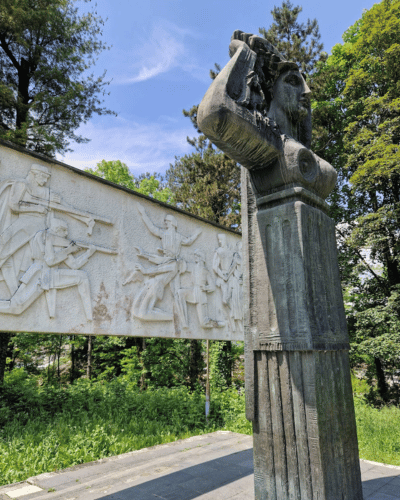
Donja Gradina is laid out as an open-air museum that preserves the authenticity of the place with only the most necessary interventions. Arranged paths run through the complex, with lighting, parking and landscaping, and all the mass graves are marked. Along the walking paths, stone plaques and signs convey information about the events at this site, making a visit both an act of remembrance and a lesson.
Visiting & information
The memorial is visited by around thirty thousand people each year, from the country and abroad. Expert staff are on site to give visitors all the information about the history of the area and the Jasenovac camp. Given the nature of the place, a dignified and quiet visit is recommended, with respect for the victims and the space of remembrance.