




Ashkenazi Synagogue


Description
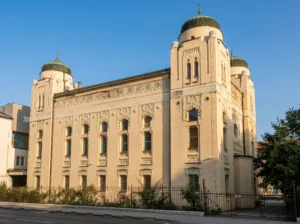
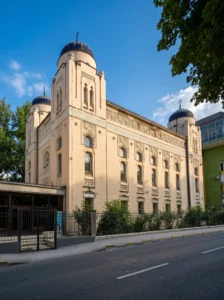
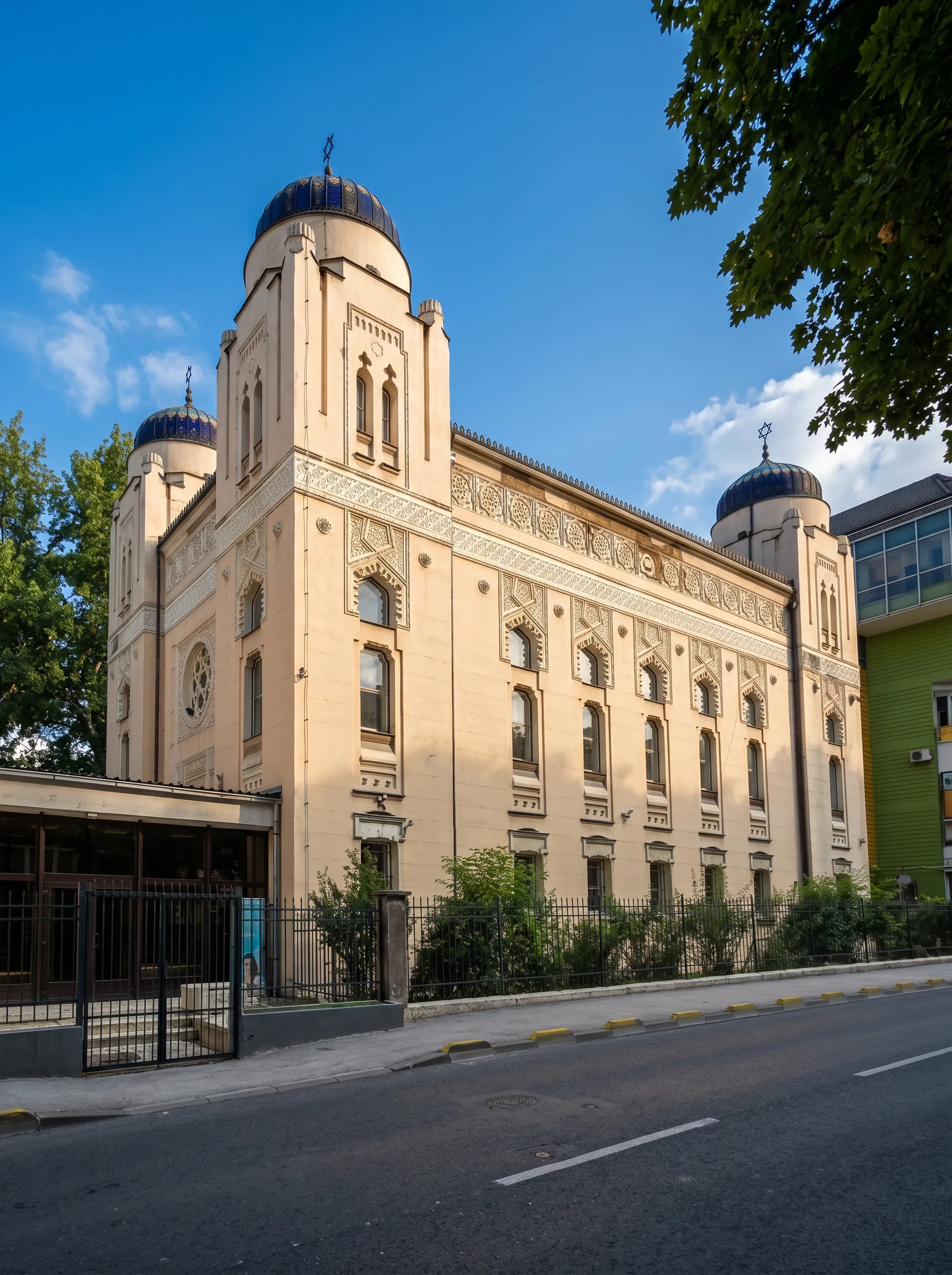
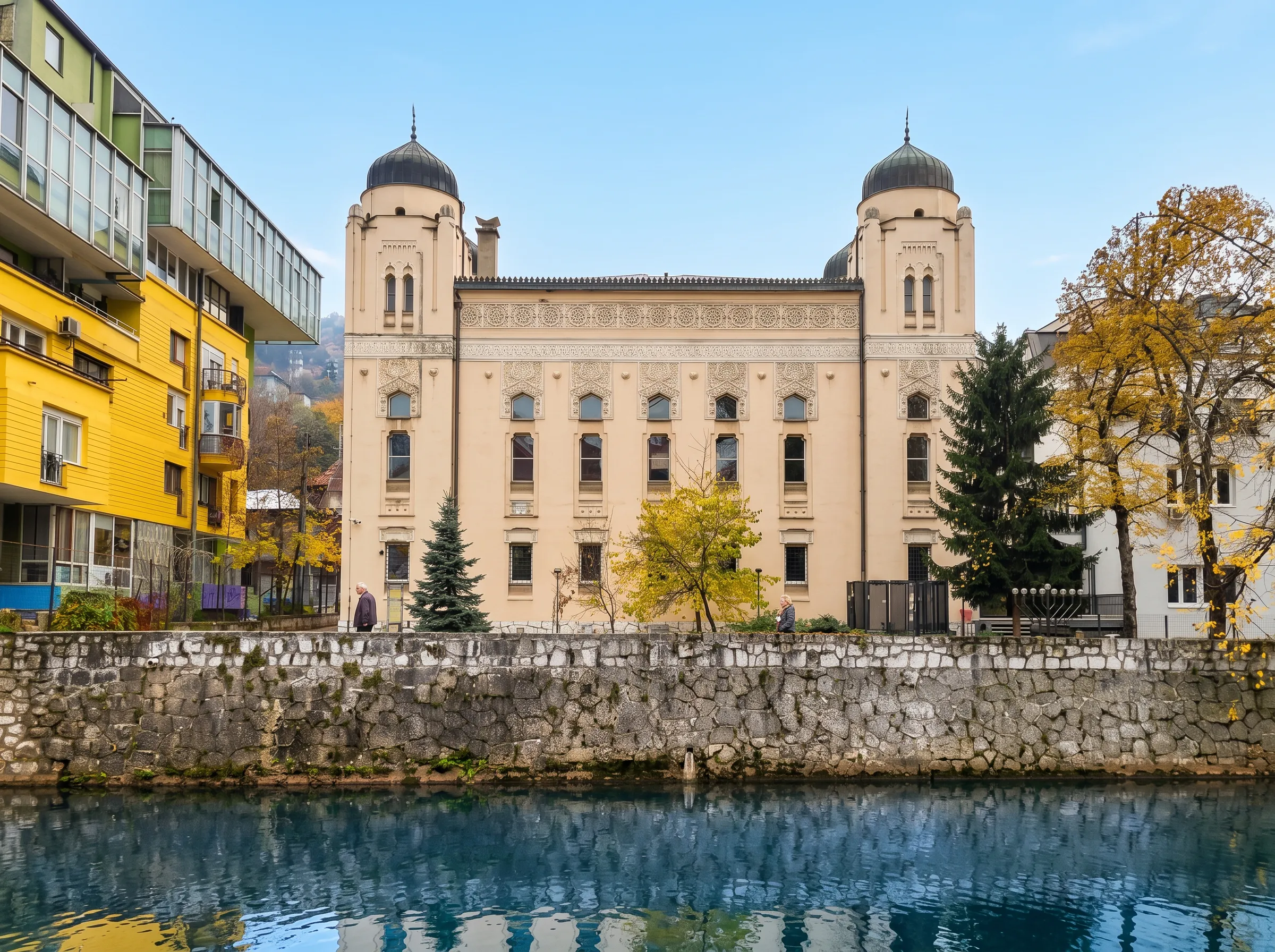
The Ashkenazi Synagogue in Sarajevo is the only active synagogue in the city and one of the most important examples of pseudo-Moorish architecture in Bosnia and Herzegovina. It was built in 1902 for the Ashkenazi Jewish community, which arrived in Sarajevo in larger numbers after the Austro-Hungarian occupation of BiH. It was designed by the renowned Sarajevo architect Karlo Paržik, modeled after the temple in Budapest.
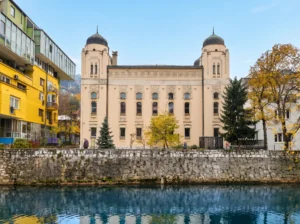
Construction was led by Ludwig Jungwirth, and the interior finishing and painting were done by master Ludwig Oisner. It is located on the left bank of the Miljacka, between the Drvenija and Ćumurija bridges, at Hamdije Kreševljakovića 59. The building is a three-nave hall structure with towers at the four corners covered by segmented domes and rich pseudo-Moorish facade decoration. After the Second World War, it remained the only active Jewish temple in Sarajevo. It was declared a national monument of BiH in 2006.
Architecture and relief ornaments
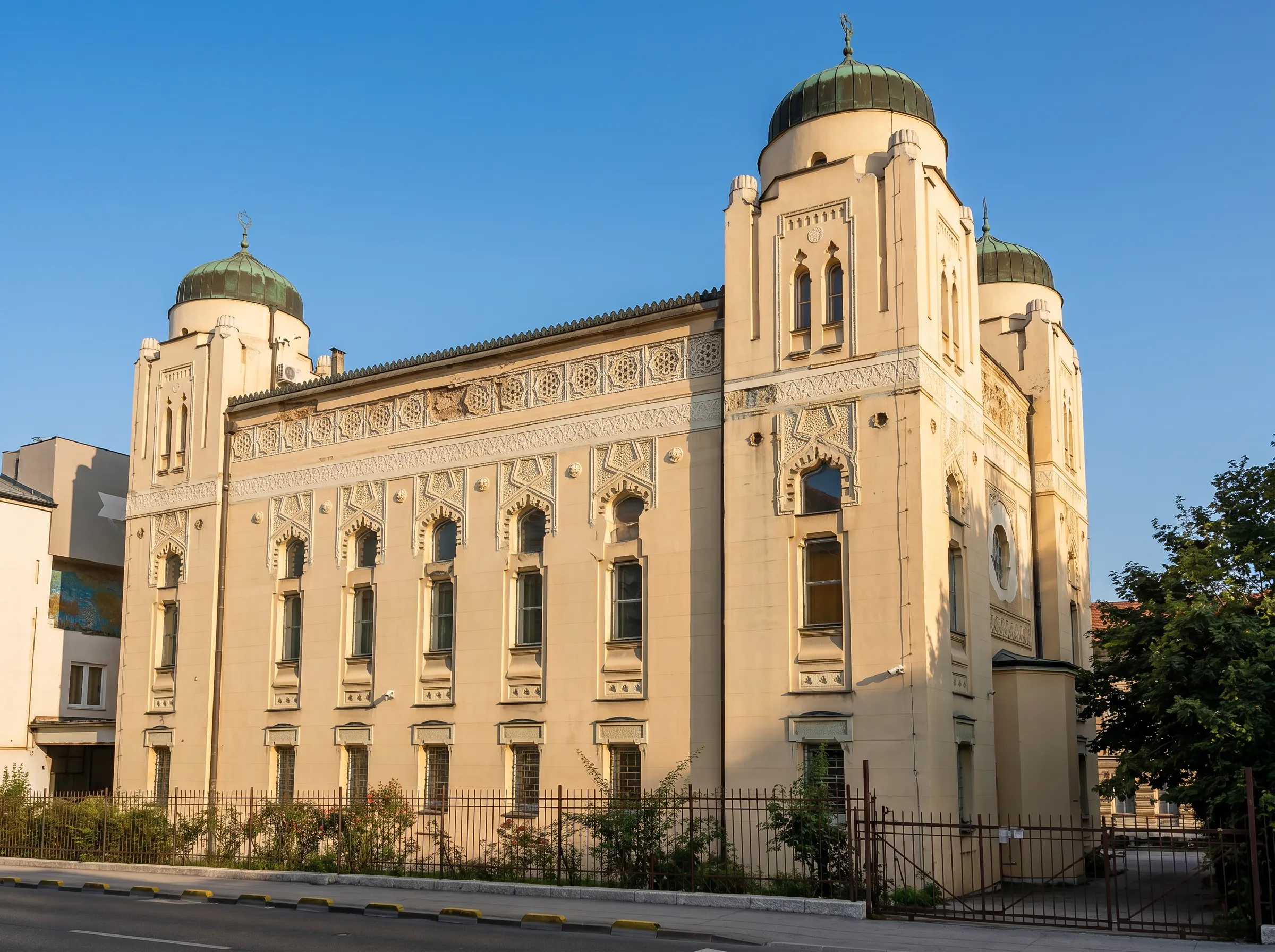
The Ashkenazi Synagogue was the first religious building in Sarajevo built in the pseudo-Moorish style — an interesting paradoxical choice, since this style draws its roots from the Islamic architecture of North Africa and Moorish Spain. Paržik applied this style, which was then fashionable and highly regarded in Austro-Hungarian Sarajevo, to a Jewish temple, creating a building that fits perfectly into Sarajevo's architectural scene from the late 19th century.
Pseudo-Moorish elements are most visible in the relief ornaments of the facades, the shapes of the arches and window openings, while the spatial concept is entirely modeled on churches in Western Europe — a slightly longitudinal, three-nave hall with an apse on the eastern side.
History of the synagogue