




Perović Bridge




Description
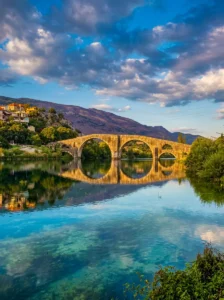
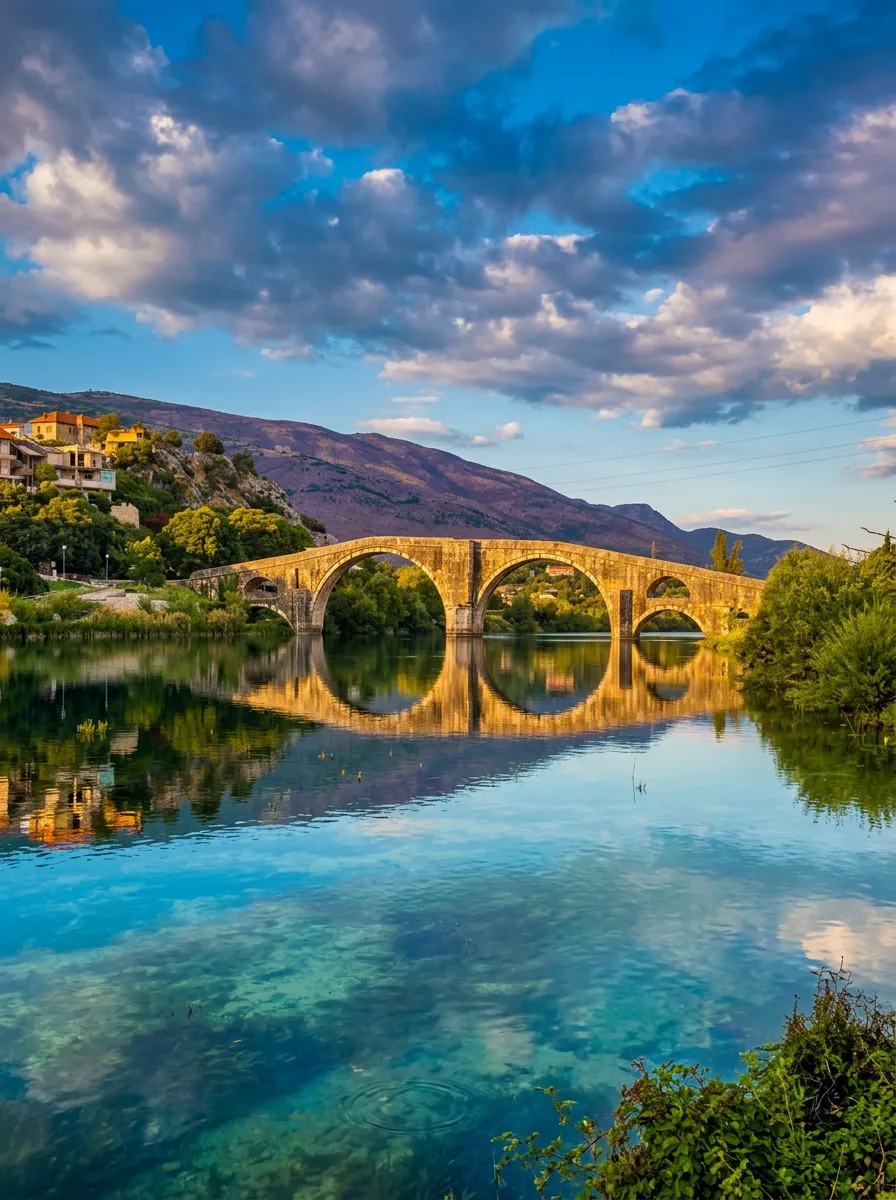
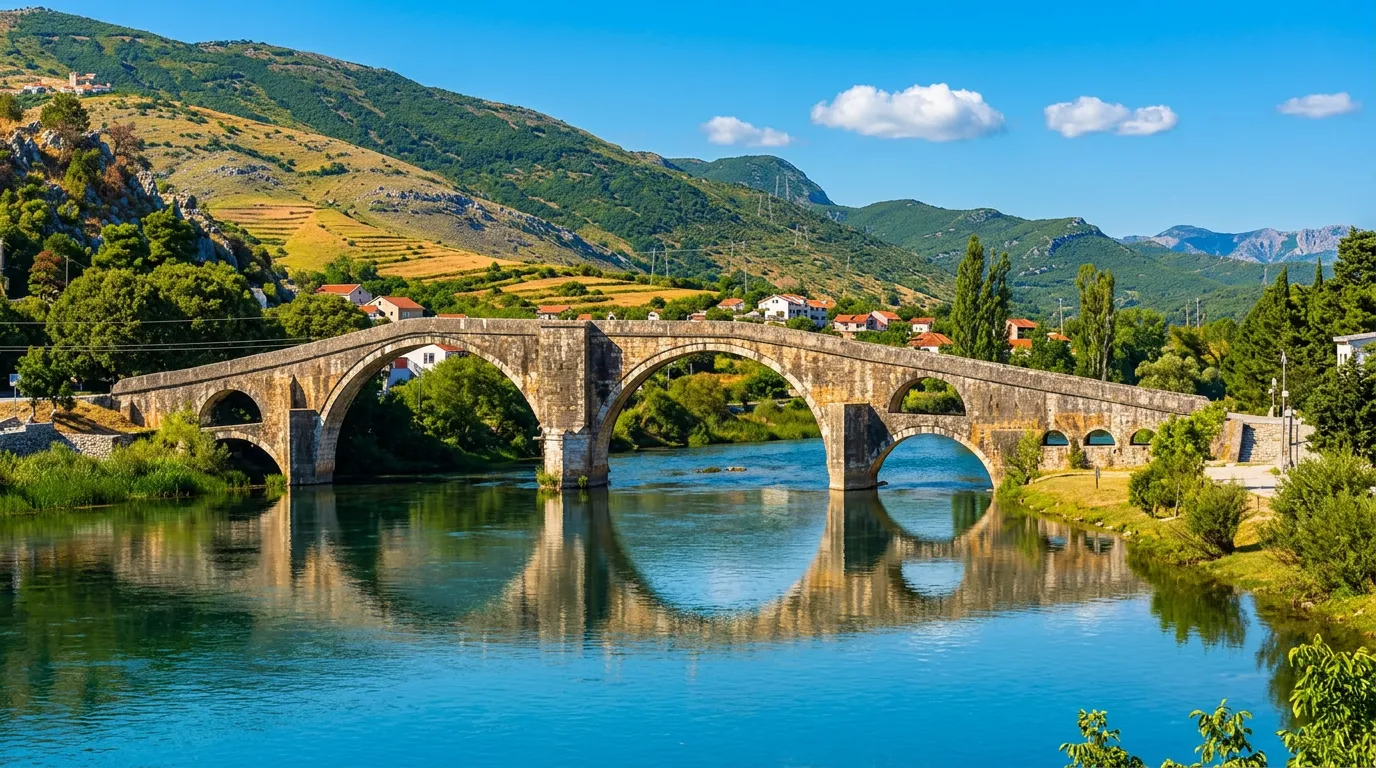
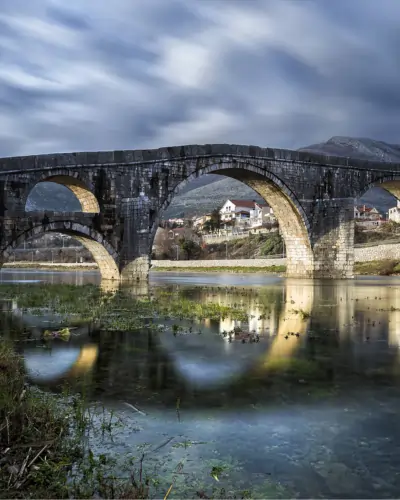
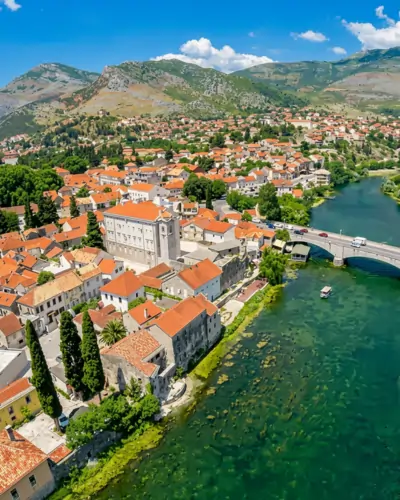
Arslanagića Bridge, also known as Perovića Bridge, is one of the most beautiful and significant Ottoman bridges in the Balkans, located in Trebinje between the settlements of Gradina and Police on the banks of the Trebišnjica River. It was built by Mehmed-paša Sokolović in 1574 as an endowment for his fallen son. The bridge bears the name Arslanagića Bridge after Arslan-aga, who was granted the right to collect bridge tolls in the late 17th century.
Built of dressed stone with two large arches and smaller openings for high water levels, it is considered the most elegant old bridge in Bosnia and Herzegovina. It has been declared a National Monument of Bosnia and Herzegovina. In 1965, the bridge was submerged by the construction of the hydroelectric system on the Trebišnjica, dismantled stone by stone, and moved 5 km downstream; the work lasted from 1970 to 1972. Remains of an even older ćuprija were found below the original location, believed by tradition to be one of the oldest in the former Yugoslavia.
Three bridges, three epithets
There is a Bosnian-Herzegovinian tradition in judging old bridges. Mostar's Old Bridge is associated with boldness, the Višegrad ćuprija with steadfast strength, and Arslanagića Bridge with elegance. The architects did not make that assessment by chance: two large arches of carefully dressed stone, harmonious proportions, and the construction precision of Mehmed-paša Sokolović made this bridge a masterpiece of Ottoman bridge-building from 1574. If it had not been moved from its original location, experts believe the bridge would have long been under UNESCO protection, just like the bridges in Mostar and Višegrad.
Practical Information